Small Numbers, Big Flavor: How Craft Brewers Fell Back in Love with the Session Beer
There was a time, not so long ago, when the number on the side of a craft beer can carried a kind of status. Double IPAs cracking 9%. Imperial stouts lounging at 13%. Barrel-aged everything pushing past 15%. If your beer didn't hit hard, the thinking went, it wasn't trying hard enough.
That era isn't exactly over — plenty of breweries are still chasing those big, boozy benchmarks. But something has shifted in the culture. Quietly at first, then with increasing conviction, a wave of craft brewers across the country has started asking a question that would have seemed almost heretical in 2014: what if lower alcohol is actually harder to pull off?
The Strength-Equals-Quality Myth
The logic behind the high-ABV obsession was never totally irrational. Alcohol carries flavor compounds. Big beers can support intense hop additions, rich malt profiles, and complex fermentation character. There's a reason a 12% Russian imperial stout tastes like a liquid dessert — the alcohol is doing a lot of work.
But somewhere along the way, that technical reality curdled into an assumption: that more alcohol meant more effort, more skill, more craft. Breweries leaned into it. Tap handles got names like "Obliterator" and "Brain Damage." ABV percentages started appearing in bold on labels, almost like a boast.
"The whole thing became a bit of a shortcut," says Marcus Webb, head brewer at Tidal Grain Brewing in Asheville, North Carolina. "High ABV forgives a lot of sins. It masks off-flavors. It gives you this big, overwhelming experience that's hard to pick apart. Session beers? You can't hide anything. Every decision you make shows up in the glass."
Webb has been brewing a rotating lineup of 4–5% beers for the past three years, including a Czech-style pilsner and a dry-hopped pale ale that have quietly become his bestsellers. He's not alone in this pivot.
The Sessionable Comeback
Across the US, from New England to the Pacific Northwest, independent breweries are expanding their low-ABV offerings — not as an afterthought or a health-conscious concession, but as a genuine point of creative pride.
At Fieldwork Brewing in Berkeley, California, session-strength beers have become a signature category. In Portland, Oregon, Breakside Brewery has been producing acclaimed 4% lagers and pale ales alongside its heftier releases for years. Even breweries that built their reputations on big, bold beers are quietly adding lighter options to the rotation.
The shift tracks with broader consumer behavior. Post-pandemic drinking habits have changed. More people are paying attention to how alcohol affects their sleep, their productivity, their overall wellness — without necessarily wanting to give up craft beer entirely. A 4.5% pale ale you can drink two of on a Tuesday night without feeling wrecked the next morning hits differently than it did a decade ago.
"Our customers aren't drinking less because they like beer less," says Jamie Okafor, co-founder of Lakeside Draft House, a taproom and small-batch brewery in Madison, Wisconsin. "They're drinking more intentionally. And they want something worth being intentional about."
The Technical Challenge Nobody's Talking About
Here's the part that gets brewers genuinely animated: making a great 4% beer is, by most accounts, significantly harder than making a great 9% beer.
At lower alcohol levels, there's less room to maneuver. Malt sweetness and hop bitterness have to be balanced with a precision that high-ABV beers simply don't demand. Fermentation character — esters, phenols, the subtle compounds yeast produces — becomes more apparent and harder to control. Off-flavors that a big imperial stout might swallow whole can torpedo a session lager entirely.
"I've brewed beers at 13% that I'm proud of," Webb says. "But nothing I've made has been as technically demanding as getting our pilsner right. It took us eight batches before I was happy with it. Eight."
This is the argument that's gaining traction in brewing circles: that the real flex isn't muscle, it's nuance. A beer that delivers complexity, drinkability, and a genuinely satisfying experience at 4.5% ABV is a harder creative problem to solve than one that leans on sheer alcoholic intensity.
Sustainability and the Low-Alcohol Equation
There's another angle to this conversation that doesn't get talked about enough: the environmental math.
High-gravity beers require more grain, more hops, longer fermentation times, and more energy to produce. In a moment when independent breweries are increasingly scrutinizing their resource use — water consumption, grain sourcing, energy costs — session beers start looking attractive from a sustainability standpoint too.
"Every barrel of water we save matters," says Okafor. "Brewing lower-ABV beers at higher volumes is actually a better business model for us right now, and it's better for our footprint. That's not a coincidence."
Some breweries are pairing this shift with investments in local and regional ingredient sourcing — lower-gravity beers often showcase those ingredients more transparently, since there's less competing for attention in the glass.
What This Means for the Competitive Landscape
For independent breweries navigating a crowded market, the session beer revival creates an interesting opportunity. The big craft players — your Sierra Nevadas, your Sam Adamses — have always had session-strength offerings. But the small-batch, artisan approach that defines the best independent taprooms can translate beautifully to low-ABV formats.
A well-made 4.2% pale ale, brewed with locally grown hops and served fresh off the tap, is exactly the kind of thing a regional craft brewery can do better than anyone else. It's not a race to the bottom. It's a different kind of competition entirely — one built on finesse rather than firepower.
"I think we're finally getting to a place where the culture rewards subtlety," says Webb. "The beer geeks who were chasing ABV in 2012 are older now. They have jobs and kids and early mornings. They still love great beer. They just want to be able to drive home afterward."
Pour It Slow
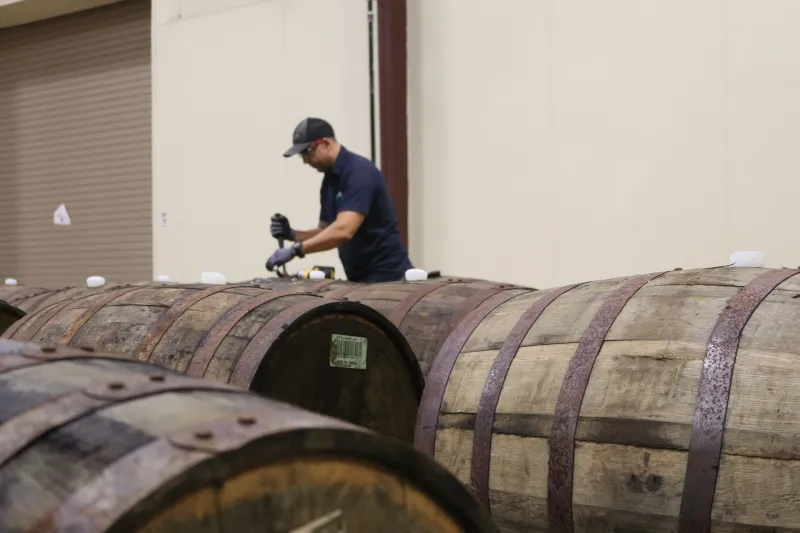
None of this means the imperial stout is going anywhere. Big beers will always have their place — especially in fall and winter, especially in the barrel-aging programs that have become such a point of pride for American craft breweries. The category isn't dying; it's just losing its monopoly on the definition of quality.
What's emerging instead is something more nuanced: a craft beer culture that judges a beer on what's actually in the glass rather than what the number on the label implies. That's a harder standard to meet, honestly. And it's a more interesting one.
For the brewers leaning into it, that's exactly the point.