Kegs Are Heavy, Cans Are Everywhere: Inside the Packaging Shift Reshaping Small Breweries
There's something undeniably romantic about a wall of taps. The row of handles, each one a little different, each one promising something cold and fresh on the other side — it's basically the visual identity of craft beer culture in America. But behind that wall, something logistical and expensive is happening, and a surprising number of brewery owners are starting to ask whether it's worth it.
The keg, for all its tradition, is becoming a problem.
The Hidden Cost of Draft
Run a small brewery long enough and you'll hear the same complaints cycle through like a bad batch of oxidized pale ale. Kegs go missing. They come back damaged. Accounts stop ordering. The cooler space at your local bar gets handed over to a macro brand that offers better margins. Draft lines get dirty and your carefully crafted IPA starts tasting like somebody's basement.
For breweries moving fewer than a few thousand barrels a year, maintaining a meaningful draft presence is an uphill battle that rarely pays for itself. "We were spending serious time and money chasing down kegs, dealing with returns, managing accounts — and at the end of the month, the numbers just didn't justify it," says one Colorado brewery owner who made the switch to cans-only distribution in 2022. "Going all-in on cans felt like a risk, but honestly it freed us up to focus on the beer."
That sentiment is showing up in markets from the Pacific Northwest to the Southeast. Breweries that once built their identity around a rotating tap list are quietly downsizing their draft footprint — or ditching it altogether — in favor of retail-ready packaging.
Cans Aren't a Compromise Anymore
For a long time, canned craft beer carried a stigma. It felt like a step down, something you grabbed at a gas station, not something you sought out at a specialty bottle shop. That perception has done a full 180.
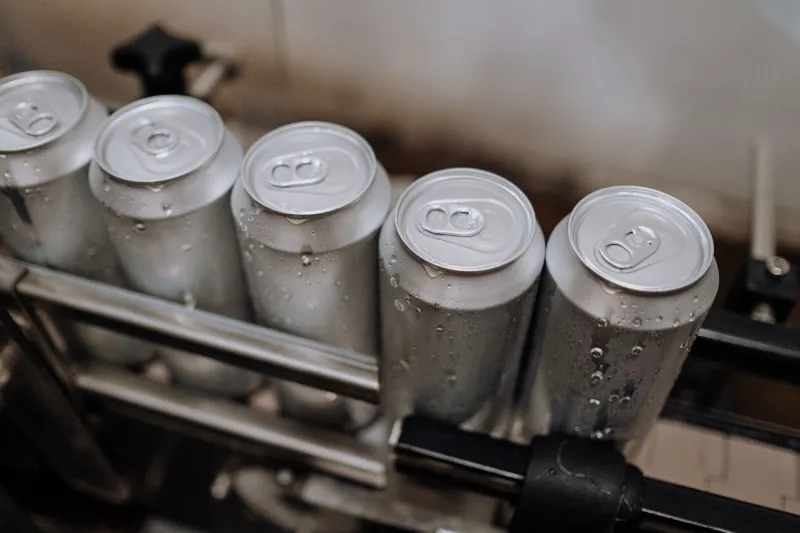
Modern canning technology — particularly the widespread adoption of small-format canning lines and mobile canning services — has made high-quality canned beer accessible to breweries that couldn't have considered it a decade ago. Oxygen pickup, once the enemy of any canned craft product, is now managed at levels that rival or beat what comes through a draft line that hasn't been properly cleaned in two weeks.
Shelf life is a genuine advantage. A well-packaged can of hazy IPA will hold its flavor profile far longer than the same beer sitting in a keg that's been tapped and partially emptied at a bar doing modest volume. For hop-forward styles especially, the can is increasingly the better vehicle.
And then there's the consumer side. People are buying beer differently. They're grabbing four-packs at the grocery store, loading up at brewery taprooms, ordering through local delivery apps. The drinking occasion has shifted — and cans travel to where people are instead of waiting for people to come to a bar.
What Happens to Taproom Culture?
Here's where it gets complicated. The taproom experience — sitting at a bar, getting a small pour of something new, talking to the person who brewed it — is built around draft beer. It's the thing that makes a brewery visit feel different from buying a six-pack at the store. If breweries pull back from draft even in their own spaces, something gets lost.
Most breweries making the packaging shift aren't abandoning their taprooms. What they're doing is rethinking the draft-to-can ratio. Some are keeping a handful of flagship handles on tap while moving limited and seasonal releases into canned formats. Others are leaning into the taproom as an experience space — a place where you come to try something before it hits shelves — rather than the primary point of consumption.
"The taproom is still the heart of what we do," says a Michigan-based brewer who reduced her draft accounts by about 60 percent last year. "But we're not trying to be everywhere on tap anymore. We'd rather have great shelf presence at twenty stores than mediocre draft lines at fifty bars."
That's a real trade-off, and not everyone in the industry is comfortable with it. Bar owners who've built their reputations on rotating local drafts aren't thrilled when the breweries they've championed stop showing up. The draft ecosystem — bars, distributors, taprooms — depends on breweries participating in it.
The Environmental Equation
No conversation about packaging is complete without talking about the environmental math, and it's messier than either side wants to admit.
Kegs, in theory, are the more sustainable option. They're reusable, they generate no single-use waste per pour, and they have a long operational life. But that math only holds if kegs are actually being returned, cleaned, refilled, and moved efficiently — a chain of custody that breaks down constantly in the real world.
Cans have a complicated environmental record. Aluminum production is energy-intensive, and while aluminum is infinitely recyclable, actual recycling rates in the US hover well below where they need to be for the material to fulfill its sustainable potential. Mobile canning operations, which many small breweries rely on, add truck miles to the equation.
The honest answer is that neither system is clean. What's becoming clearer is that a keg that goes unreturned, or a draft line that dumps product, isn't the environmental win it looks like on paper.
The Draft Future Isn't Dead — It's Just Smaller
Pull back from the doom-and-gloom framing and what you're really seeing is a maturation of the craft beer market. The explosion of draft taps in the 2010s was never entirely sustainable. Bars couldn't keep up with the volume of new breweries, lines got neglected, and product quality suffered. A correction was inevitable.
What's emerging looks less like the death of draft and more like a recalibration. Breweries are being selective. Draft is increasingly reserved for the taproom experience and a handful of strong, well-maintained accounts. Cans are handling the distribution heavy lifting.
For the beer drinker, that probably means a slightly smaller tap list at your local bar — but hopefully a better-maintained one. It means more interesting options in the canned beer aisle. And it means the breweries you love might actually be around long enough to keep making the stuff you love.
The keg isn't going anywhere. But it's learning to share the floor.