Bacteria, Wild Yeast, and Bold Opinions: Inside America's Sour Beer Obsession
Order a Berliner Weisse at your local taproom five years ago and you might have gotten a blank stare. Ask for one today and you'll probably face a lineup of four or five options, each fermented with a different strain of lactobacillus, each spiked with a rotating cast of fruit, herbs, or whatever the brewer happened to be obsessing over that week. Sour beer has arrived — loudly, tartly, and with absolutely no apologies.
But spend any time in craft beer circles and you'll hear the other side too. "It tastes like someone left it out," is a complaint that still echoes across bar tops from Portland, Maine to Portland, Oregon. The style is divisive in a way that even the hoppiest double IPA never quite managed to be. And that tension — between the curious and the converted, the skeptical and the devoted — is exactly what makes sour ale one of the most fascinating chapters in American craft brewing right now.
How We Got Here
The roots of sour beer run deep in European tradition. Belgian lambics, Flanders red ales, and German Gose styles have been around for centuries, relying on open fermentation and wild microorganisms to build complexity. American brewers started paying serious attention in the early 2000s, but it wasn't until the mid-2010s that the style really cracked into mainstream craft consciousness.
A handful of pioneering producers deserve a lot of credit for that shift. Russian River Brewing in Santa Rosa, California was already legendary for its hoppy beers when it started releasing sour programs that drew multi-hour lines. New Belgium in Fort Collins, Colorado leaned into its Belgian heritage with its La Folie line. Jolly Pumpkin in Dexter, Michigan built an entire identity around spontaneous fermentation and barrel-aged wild ales. These weren't side projects — they were flagship statements.
"When we started doing sours, people thought we'd lost our minds," says Marcus Trelle, head brewer at a mid-sized regional operation in Asheville, North Carolina that now devotes nearly a third of its production to wild and mixed-fermentation beers. "Now it's the section of the menu that sells out first on release days."
The Science of Sour (And Why It's Harder Than It Looks)
Producing a consistent, well-crafted sour beer isn't just a matter of letting things go wrong in an interesting way. It requires a genuine understanding of microbiology — specifically how organisms like lactobacillus, pediococcus, and brettanomyces interact with wort and with each other over time.
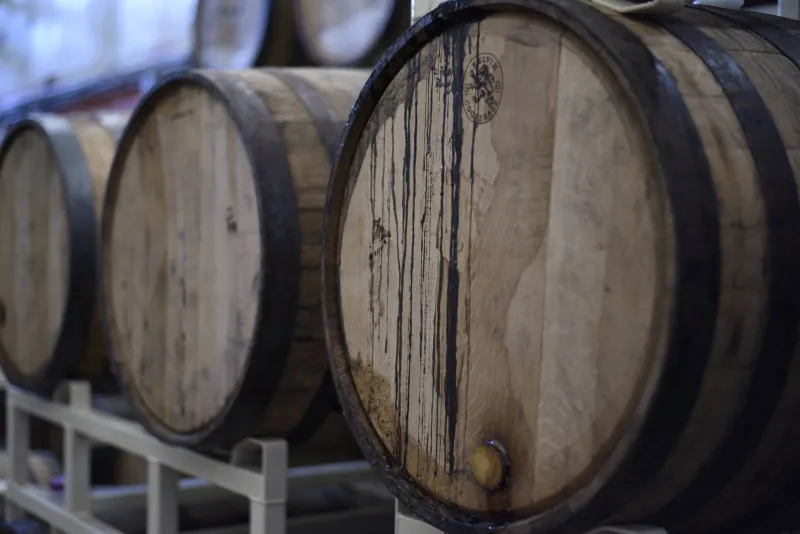
Kettle souring, where brewer-introduced lactobacillus acidifies the wort before fermentation, offers more control and faster turnaround. It's the method behind many of the fruit-forward Berliners and Goses that now crowd taproom menus. Mixed fermentation and spontaneous methods — where wild microbes do the heavy lifting over months or years in oak barrels — produce something altogether wilder and less predictable.
"There's a real craft to it," explains Dena Forsythe, co-founder and brewmaster at Watershed Fermentation Project in Richmond, Virginia, one of the East Coast's most talked-about wild ale producers. "You're not fighting the bacteria. You're collaborating with it. The best batches feel like they have a personality — something you didn't fully design yourself."
That unpredictability is part of the appeal for a segment of beer drinkers who've grown restless with the precision of modern brewing. It's also part of what makes some consumers deeply uncomfortable.
The Blind Taste Test That Changed Some Minds
We ran an informal blind tasting at a recent craft beer event in Chicago, presenting twelve attendees — half self-described sour skeptics — with four unlabeled samples: a kettle-soured Gose with sea salt and coriander, a barrel-aged Flanders red, a dry-hopped Berliner Weisse, and a lightly tart saison. Participants were asked to rate each on a scale of one to ten before knowing what they were drinking.
The results were telling. Three of the four skeptics gave their highest scores to at least one sour sample. The Gose and the saison — both on the milder end of the acidity spectrum — ranked highest overall. The Flanders red divided the room cleanly: four tens and four twos, almost nothing in between.
"I genuinely didn't know that was sour," admitted one participant about the dry-hopped Berliner. "I thought it was just a really refreshing wheat beer."
That reaction points to something important: the sour category is far broader than its reputation suggests. Entry-level styles like Gose and Berliner Weisse are approachable enough to convert casual drinkers. The complex, funky end of the spectrum — think three-year barrel-aged lambic-style blends — rewards patience and an open palate.
Regional Scenes Worth Watching
The sour movement isn't concentrated in any one corner of the country. Upstate New York has developed a serious wild ale culture, with producers like Transmitter Brewing in Queens and Hudson Valley Brewery pushing the boundaries of what American sour can look and taste like. The Pacific Northwest, already known for its experimental brewing culture, has seen producers in Portland and Seattle lean hard into spontaneous fermentation programs.
Texas has emerged as a surprising hotbed, with Hill Country breweries aging mixed-fermentation beers in old wine and spirit barrels sourced from the state's booming wine and whiskey industries. The results are genuinely distinct — terroir-driven in a way that's hard to replicate elsewhere.
"We're pulling from the land here in a real way," says one Texas brewer who asked not to be named ahead of a planned label launch. "The barrels carry history. The microbes are local. It tastes like this place."
What the Skeptics Are Actually Saying
It would be too easy to dismiss sour skepticism as simple close-mindedness. Some of the pushback is legitimate. The category has attracted its share of poorly executed beers — overcarbonated, unbalanced, or aggressively acidic in ways that feel accidental rather than intentional. And the trend toward novelty adjuncts (cotton candy Berliners, anyone?) has produced some genuinely baffling releases.
"Not every sour needs a gimmick," says Trelle. "The best ones are the ones where the fermentation character is the star. When you're dumping in three pounds of candy per barrel, you're hiding something."
That tension between artistry and novelty-chasing is one the industry is actively working through. The breweries earning the most respect right now are the ones treating wild fermentation as a discipline — studying it, refining it, and building reputations one carefully blended barrel at a time.
The Tap Handle Isn't Going Anywhere
Love them or find them baffling, sour and wild ales have permanently altered the shape of American craft beer. They've pushed brewers to think like scientists, like winemakers, and sometimes like philosophers. They've created a new vocabulary for beer drinkers — funkiness, barnyard, Brett, acidity — and introduced a level of patience and process-obsession that most other styles simply don't demand.
Maybe more importantly, they've proven that craft beer still has room to genuinely surprise people. In a market where the next NEIPA or pastry stout can feel predictable before it even hits the shelf, there's something refreshing about a style that refuses to be fully controlled.
Even if it does, occasionally, taste a little like someone left it out.