Cloudy With a Chance of Hops: How Hazy IPAs Rewrote the Rules of the IPA Game
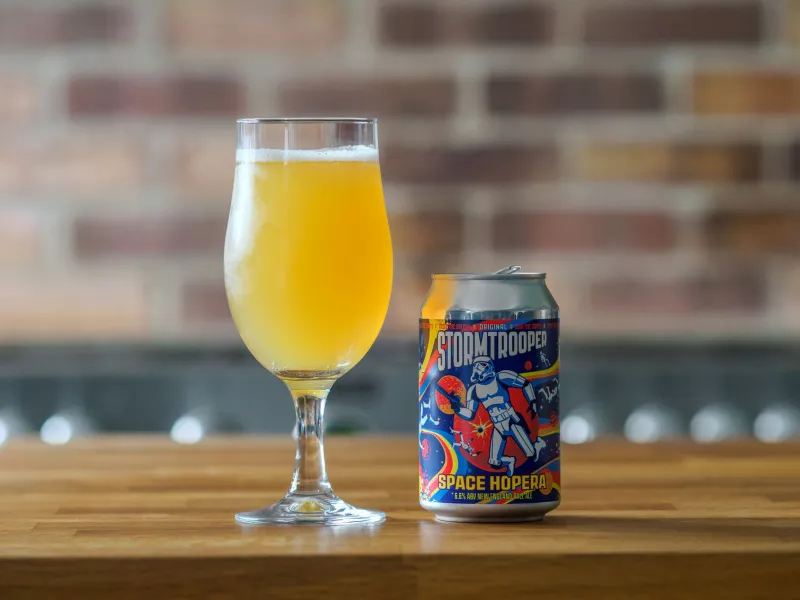
There's a moment every craft beer drinker remembers — the first time someone handed them a glass of something that looked more like fresh-pressed orange juice than beer. Maybe they hesitated. Maybe they asked if it was supposed to look like that. And then they took a sip, and suddenly the whole IPA landscape shifted beneath their feet.
That's the power of the New England-style hazy IPA. And if you ask the traditionalists on the West Coast, it's either the best thing to happen to craft beer in a generation — or a soft, murky betrayal of everything IPAs stood for.
Either way, it's impossible to ignore.
Where It All Started: Vermont and the Birth of the Haze
Credit where it's due: the hazy IPA owes its origin story to a small brewery in Waterbury, Vermont. The Alchemist's Heady Topper, first brewed in 2003 and canned starting in 2011, became a cult phenomenon long before "NEIPA" was even a hashtag. Brewer John Kimmich wasn't trying to start a movement — he was chasing a flavor profile that prioritized tropical fruit, soft mouthfeel, and a gentler bitterness than what the West Coast was pouring.
The cloudiness wasn't a mistake. It was a byproduct of dry-hopping aggressively with hops loaded with aromatic compounds called terpenes and thiols, combined with specific yeast strains that stayed in suspension longer. The result was beer that looked hazy and tasted like a fruit stand in a glass.
Word spread fast. By the mid-2010s, brewers from Maine to Massachusetts were chasing the style, and drinkers were driving hours — sometimes across state lines — to score a four-pack.
The West Coast Strikes Back (Sort Of)
Meanwhile, out west, breweries like Russian River, Dogfish Head's kindred spirits, and a dozen San Diego institutions had spent decades perfecting the West Coast IPA — clean, clear, aggressively bitter, and built on a foundation of Cascade, Centennial, and Chinook hops. These were beers that didn't apologize for their bite.
When the haze wave hit, reactions were mixed. Some West Coast brewmasters were dismissive, arguing that the cloudiness came from unfiltered proteins and yeast — essentially, unfinished beer. Others were curious. A few quietly started experimenting in the back of their brewhouses.
"We weren't going to just ignore what was happening," says one head brewer at a prominent San Diego craft operation who asked not to be named. "Our customers were asking for it. So we started playing around with it, and honestly? It's a genuinely different skill set. Getting that soft body without making it taste muddy — that's harder than it looks."
That admission says a lot. The hazy IPA wasn't just a marketing trend. It was a technical challenge that demanded a different approach to water chemistry, yeast selection, and hop timing.
The Science Behind the Cloud
So what exactly makes a hazy IPA hazy? It comes down to a few key factors working together.
First, yeast. NEIPA brewers typically use strains — like London Ale III or various proprietary house strains — that produce more fruity esters and stay in suspension longer than the cleaner, more flocculent yeasts favored out west.
Second, hop selection and timing. Late additions and heavy dry-hopping with varieties like Citra, Mosaic, Galaxy, and Sabro pack in aromatic compounds without extracting the harsh, resinous bitterness you'd get from early kettle additions. The biotransformation that happens when hops interact with active yeast during fermentation also creates entirely new flavor compounds that simply don't exist in a traditionally hopped beer.
Third, water chemistry. NEIPA brewers often target water profiles with higher chloride levels, which emphasizes softness and roundness over the sulfate-heavy profiles that accentuate bitterness in West Coast styles.
The result is a beer with a fundamentally different sensory experience — one that's divided opinion and expanded the IPA category simultaneously.
Breweries Pushing the Conversation Forward
Today, the hazy IPA isn't just a New England story. Breweries across the country are putting their own stamp on the style while the debate over regional identity continues to evolve.
Treehouse Brewing in Charlton, Massachusetts has become a pilgrimage destination, with lines forming before the taproom opens on weekends. Their Julius IPA is widely considered a benchmark of the style — lush, aromatic, and almost dangerously drinkable.
Out west, Monkish Brewing in Torrance, California built an entire identity around the hazy format, releasing limited cans that sell out within hours. They've proven that the style doesn't belong to any one zip code.
And in the middle of the country, places like Trillium's satellite taprooms and midwest upstarts like Midwest Coast Brewing are blending influences from both coasts, creating hybrid expressions that lean tropical but carry a bit more of that assertive hop character that West Coast loyalists love.
Is the Divide Even Real Anymore?
Here's the honest answer: the East Coast vs. West Coast IPA rivalry makes for a great story, but the lines have blurred considerably. Most craft breweries worth their grain bill now produce both styles. Drinkers aren't picking sides — they're picking moods.
What the hazy IPA really did was prove that the IPA category had room to grow in directions nobody had fully explored. It brought in drinkers who found traditional IPAs too aggressive. It challenged experienced brewers to learn new techniques. And it sparked a wave of innovation in hop breeding and fermentation science that's still paying dividends.
The haze wars didn't produce a winner. They produced better beer. And honestly, that's the only outcome worth celebrating.
What's Next for the Hazy
The style continues to evolve. Brewers are experimenting with cold-side dry hopping, cryo hops, and hop hash to push aromatic intensity even further. Others are dialing back the sweetness to create leaner, more sessionable hazy options. And a growing number are exploring hybrid expressions — "West Coast Hazy" IPAs that carry the soft body of a NEIPA but the drier finish of a California classic.
Wherever the style goes next, one thing is clear: the cloudy revolution isn't clearing up anytime soon. And the best breweries on both coasts are better for having weathered it.