More Than a Pour: The Taproom Revolution Keeping Independent Breweries Alive
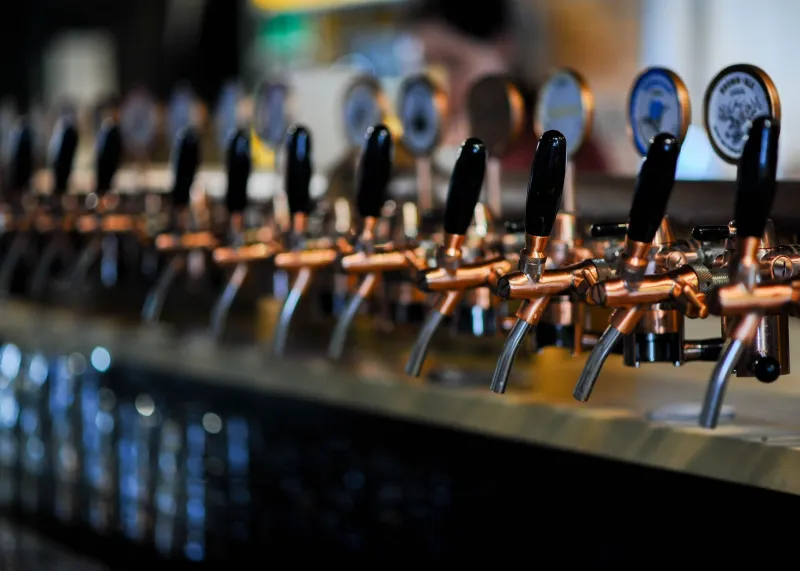
Walk into the right taproom on a Friday night and you might catch a bluegrass band setting up in the corner, smell a local food truck firing up outside, watch a dozen people hunched over a board game tournament, or find yourself standing next to someone who's been coming here every week for three years — not just for the beer, but for the feeling.
That feeling is hard to bottle. But it might be the most valuable thing an independent brewery can produce right now.
The craft beer industry has had a rough few years. Distribution is brutal. Shelf space at grocery stores is a cage match. And the pandemic didn't just close taprooms temporarily — it forced every brewery owner in America to ask a very uncomfortable question: what are we actually selling here?
The breweries that survived — and in some cases, thrived — figured out the answer. They're not just selling beer. They're selling a place.
The Economics Are Simple, Even When the Execution Isn't
Here's the math that every taproom operator understands: when you sell a pint directly to a customer across your own bar, you keep nearly all of it. When you sell through a distributor to a retailer, you're lucky to see a third of the retail price. For small, independent operations without the volume to negotiate favorable distribution terms, the taproom isn't just a nice amenity — it's often the financial backbone of the entire business.
Post-pandemic, that reality snapped into focus hard and fast. Breweries that had leaned heavily on distribution suddenly found their margins evaporating. Those with strong taproom followings had a cushion. Some had more than a cushion — they had a community that showed up.
"When we had to close for a while, our regulars were buying gift cards, ordering merch, doing whatever they could," says Marcus Webb, co-founder of Fieldwork Collective, a community-focused taproom in Asheville, North Carolina. "That's when we realized this place meant something to people beyond the beer. That changed how we thought about everything we do here."
Fieldwork Collective responded by doubling down on programming — monthly homebrewer meetups, a rotating local artist wall, and a standing Wednesday acoustic night that's become a neighborhood institution.
Five Taprooms Doing It Right
Fieldwork Collective — Asheville, NC Asheville is already a craft beer destination, but Fieldwork has carved out a distinct identity by centering community over competition. Their "Brewer's Table" series brings in guest brewers from around the region for collaborative tapping events that feel more like dinner parties than marketing stunts. The vibe is deliberately unpretentious, and it shows in the crowd — equal parts tourists and locals who've been coming since the doors opened.
Silo & Spoke Brewing — Kansas City, MO In a city that doesn't always get the craft beer credit it deserves, Silo & Spoke has built something genuinely special by treating their taproom as a multifunction community space. Weekend mornings bring yoga classes in the taproom before it opens for service. Afternoons see local coffee roasters running a pop-up bar from the same counter that pours pints by evening. It sounds chaotic on paper — in practice, it's packed every single day.
"We wanted people to have a reason to be here at 8 a.m. and at 8 p.m.," says taproom manager Deja Okafor. "The beer is the thread, but the experience is what makes it sticky."
Ironside Fermentation — Portland, ME Maine winters are brutal, and keeping people coming through the door in February requires real creativity. Ironside solved it with a rotating programming calendar that includes trivia nights, a monthly vinyl swap meet, and a standing partnership with a local bookshop that turns one Sunday a month into a "Pints and Pages" reading event. Their taproom has a waiting list for event seats most weekends.
Suncup Brewing — Denver, CO Denver's brewing scene is crowded and competitive, which is exactly why Suncup leaned into what nobody else was doing: board games. An entire wall of their taproom is dedicated to a curated library of over 200 games available for table use, and they run a weekly game night with prizes (naturally, in the form of beer). It sounds niche. It has built one of the most loyal regular crowds in a city full of options.
Harvest Table Brewing — Fredericksburg, VA Located in a region better known for wineries, Harvest Table has done something quietly brilliant — they've embraced that context instead of fighting it. Their taproom hosts regular "Beer vs. Wine" comparative tastings that draw both beer lovers and wine drinkers from the surrounding wine country. It's a genuine conversation starter, and it's introduced a whole new audience to craft beer in a way that feels welcoming rather than evangelical.
Programming Is the New Marketing
What all five of these taprooms share is a fundamental reframe: programming isn't a side project. It's a core part of the business model.
In an era when reaching new customers through traditional advertising is expensive and increasingly ineffective, a well-run event does something no Instagram ad can replicate — it gives people a story to tell. Someone who comes to a trivia night, has a great time, and leaves with a crowler of their new favorite IPA isn't just a customer. They're an ambassador.
"Word of mouth is still the most powerful thing we've got," says Webb of Fieldwork Collective. "If someone has a genuinely great night here, they tell five people. That's worth more than any paid post."
The Taproom as Third Place
Sociologists have long talked about the concept of the "third place" — somewhere that's not home and not work, where people gather and build community. For a long time, that role was filled by bars, diners, and coffee shops. Increasingly, craft taprooms are stepping into that space.
The best ones aren't trying to be all things to all people. They have a personality, a point of view, a sense of who their community is and what it needs. Some are loud and lively. Some are quiet and contemplative. Some have kids running around on weekend afternoons and settle into a date-night crowd by evening.
What they all have in common is intentionality. The taproom revolution isn't an accident — it's the result of brewery owners making a deliberate choice to invest in experience as much as in equipment.
And in a market that gets harder every year for independent operators, that investment might be the most important one they ever make.
The Draft at the End of the Day
The independent brewery that's purely a production operation, moving kegs out the back door and hoping for the best, is fighting an increasingly difficult battle. But the one with a taproom that feels like home to a hundred regulars? That place has something distribution can't replicate and big breweries can't easily buy.
It has a community. And right now, that's the most valuable draft on the menu.