Wax Tops and Waiting Lists: Inside the Wild World of Rare Beer Collecting
It's 4 a.m. on a Saturday in November, and there's already a line wrapping around the building outside a mid-sized brewery in Louisville, Kentucky. Nobody's hungover. Nobody's being rowdy. They're bundled up in camping chairs, sipping thermoses of coffee, scrolling their phones — and waiting for a chance to buy beer.
Not just any beer. We're talking about a bourbon-barrel-aged imperial stout that's been aging for two-plus years, bottled in a wax-dipped 750ml, numbered by hand, and allocated in quantities so small that some people in that line will walk away empty-handed. Welcome to the release day experience — one of craft beer culture's most intense and polarizing rituals.
How We Got Here
Barrel-aged beers have been around since long before the craft beer boom, but the collector frenzy surrounding them is a more recent phenomenon. Breweries like Goose Island, with their Bourbon County Brand Stout, and Founders, with their Kentucky Breakfast Stout (KBS), helped establish the idea that some beers were worth planning your calendar around. As the craft beer market matured and consumers got more sophisticated, the appetite for rare, time-intensive releases only grew.
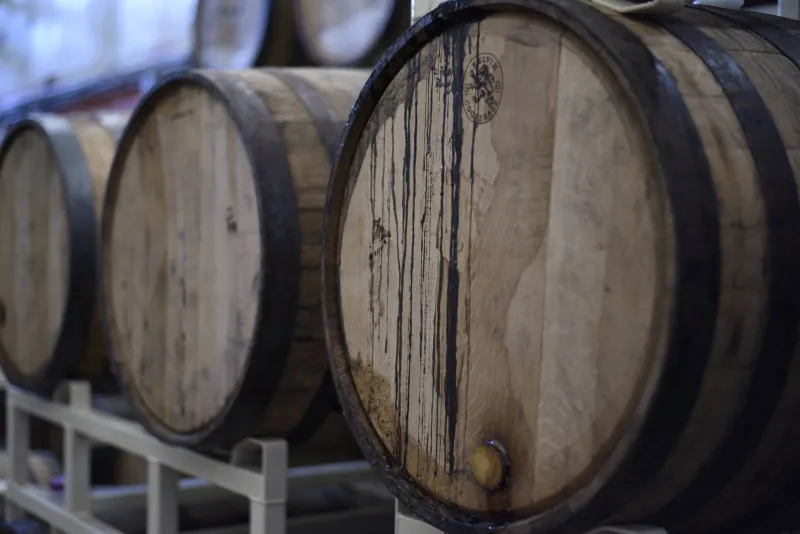
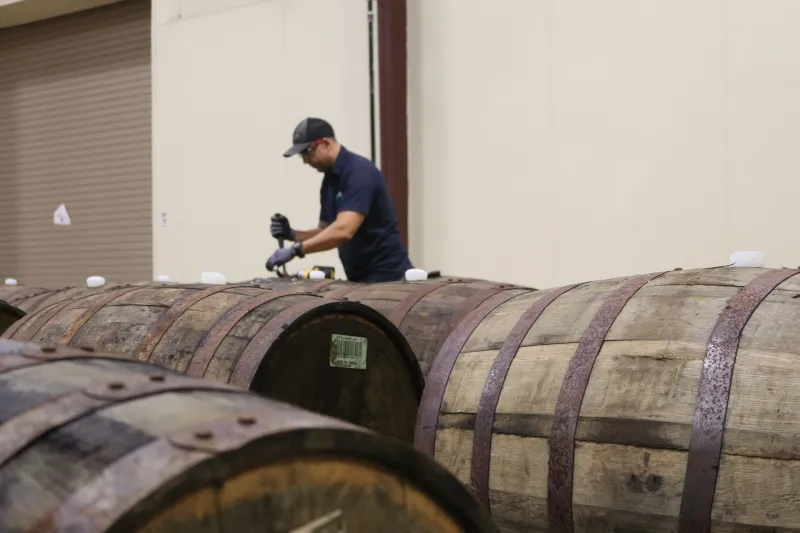
The logic makes a certain kind of sense. Barrel-aged beers take real time — often 12 to 24 months sitting in spirit barrels — and the ingredients aren't cheap. Production is genuinely limited. When a brewery makes 200 cases of something it spent two years crafting, scarcity isn't always a marketing trick. Sometimes it's just math.
But somewhere along the way, scarcity itself became part of the product.
The Secondary Market Is Real — and Thriving
Ask any serious collector and they'll tell you: there's a whole parallel economy running underneath the official release system. Facebook groups, Reddit communities like r/beertrade, and platforms like CellarHQ have created bustling secondary markets where rare bottles change hands for two, five, sometimes ten times their retail price.
A bottle of Toppling Goliath's Assassin or Firestone Walker's Parabola that retails for $25–$40 might fetch $150 or more on the secondary market. Some ultra-limited releases — think Westvleteren-style white whales — have sold for hundreds of dollars a bottle. Beer, for a segment of the enthusiast community, has become something closer to wine futures or limited-edition sneakers than a simple consumer product.
Collectors talk about their cellars the way investors talk about portfolios. They track condition, vintage years, and provenance. They debate whether vertical sets (multiple years of the same release) hold value better than one-offs. Some are genuinely drinking and sharing these beers with friends. Others are holding.
"I've got bottles I bought five years ago that I haven't opened yet," one collector from Chicago told us. "Part of it is the experience of cracking something special at the right moment. Part of it is... honestly, I'm not sure I could bring myself to open some of them anymore."
The Psychology of the Drop
Brewing industry observers — and a few behavioral economists who've taken notice of the phenomenon — point to a familiar psychological cocktail at work here. Scarcity triggers urgency. Social proof (everyone else wants it, so it must be worth wanting) amplifies desire. And the ritual of the release — the campout, the lottery, the wristband system — turns purchasing a beer into an event, complete with its own community, folklore, and shared identity.
Breweries are keenly aware of this dynamic. Some lean into it deliberately, using lottery systems, mailing list pre-sales, and timed drops that mirror the streetwear playbook almost beat for beat. Others are more conflicted. Several brewery owners we spoke with expressed genuine discomfort with the secondary market prices their beers command, worried that it prices out casual fans and turns craft beer into an exclusivity contest.
"We make beer for people to drink," said one Midwest brewery owner who asked not to be named. "When a bottle of ours shows up on a trading site for $200, that's not what we intended. But we also can't control it once it leaves our taproom."
Community Builder or Community Fracture?
This is where the conversation gets thorny. On one hand, the collector culture around rare beer has built genuine community. Trading networks foster friendships across state lines. Release day lines become social events where enthusiasts geek out over flavor profiles, share pours from their own cellars, and swap stories. There's a camaraderie to it that longtime participants genuinely cherish.
On the other hand, the financialization of rare beer has introduced some real friction. Scalpers who have no interest in craft beer culture buy up allocations purely to flip them. Lottery systems that were designed to be fair get gamed by organized buying groups. Newcomers who might have grown into devoted craft beer fans get shut out of experiences that feel gatekept by time, money, or insider knowledge.
Some breweries have responded by implementing purchase limits, ID verification, and in-person-only pickup requirements. Others have deliberately moved toward more frequent, smaller releases rather than one big annual event, trying to reduce the feeding frenzy effect.
Is It Good for Craft Beer?
The honest answer is: it's complicated. The collector economy has undeniably raised the profile and perceived value of craft beer as a category. It's driven investment in barrel programs, pushed brewers to experiment with more ambitious aging projects, and given enthusiasts a reason to engage deeply with the stories behind what's in their glass.
But craft beer's identity has always been rooted in accessibility — in the idea that great beer is something you share with your neighbors, not something you lock in a climate-controlled cellar and photograph for Instagram. When the experience of obtaining a beer becomes more elaborate than the experience of drinking it, something worth examining is happening.
The breweries navigating this tension most thoughtfully seem to be the ones who treat scarcity as a byproduct of quality rather than a feature to be engineered. They're the ones making sure their taproom regulars get first access, keeping prices honest, and talking openly about what goes into their barrel programs — because the beer itself, not the hunt for it, is the whole point.
Still, if you're planning to camp out for a release this winter, we're not judging. Just bring good coffee and maybe a pour from last year's vintage to share with the line.