Before the Hop Craze: Why Craft Brewers Are Digging Up Ancient Grains to Rewrite What Beer Can Be
For the better part of two decades, the American craft beer conversation has been dominated by one thing: hops. Alpha acids. IBUs. Dry-hopping schedules. The language of the IPA era is practically its own dialect. But spend a little time talking to brewers on the leading edge of the industry right now, and you start to hear a different vocabulary. Words like einkorn, emmer, spelt, and heritage barley are creeping into grain bills. And the beers coming out of these experiments? They taste like nothing your local tap list has ever offered.
This isn't a fringe trend. It's a full-on philosophical pivot—one that's forcing drinkers to ask a question they haven't had to seriously consider in a while: what is beer, really, without the hops?
The Grain Was Always the Story
Here's something that tends to get lost in the hop-forward era: for most of human history, beer was a grain story. Ancient Mesopotamian brewers weren't obsessing over pellet additions. Medieval European monasteries weren't chasing tropical fruit aromatics. The grain—its character, its terroir, its starch profile—was the whole point.
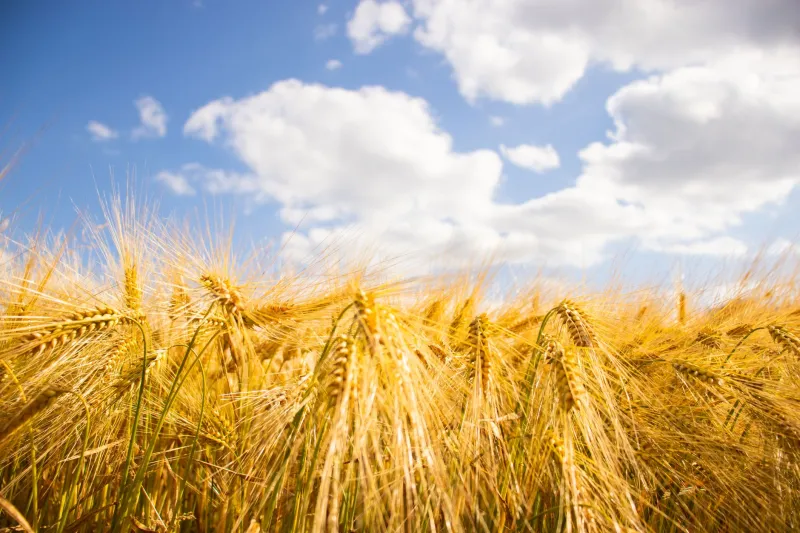
Einkorn, one of the earliest cultivated wheats, dates back more than 10,000 years. Emmer, another ancient wheat variety, fueled Egyptian civilization. Heritage barley landraces—the regionally adapted, pre-industrial strains that modern agriculture largely bred out of existence—carried flavors and fermentation characteristics that today's commodity malt simply doesn't replicate.
Brewers like those at Scratch Brewing Company in Ava, Illinois, and Dogfish Head in Milton, Delaware, have been experimenting in this space for years. But the movement has accelerated. Small malting operations—sometimes called craft maltsters—have started working directly with heritage grain farmers to bring these varieties back into commercial production, giving brewers access to ingredients they simply couldn't source a decade ago.
What These Beers Actually Taste Like
If you walk into a conversation about ancient grain beers expecting something mild and forgettable, prepare to recalibrate. Einkorn brings a nutty, almost earthy depth that modern barley malt doesn't really have. Spelt contributes a subtle sweetness and a silkier mouthfeel. Emmer can read almost savory on the palate—grainy in the most literal, satisfying sense of the word.
Many of the brewers working in this space are pairing these grains with minimal hopping or heritage hop varieties that complement rather than dominate. The result is beer that tastes like it was made somewhere specific, by someone who thought hard about every ingredient. It's the opposite of the generic double IPA that could have been brewed in any state.
That specificity is exactly what's attracting a devoted audience. Drinkers who've been through the haze craze, the pastry stout phase, and the hard seltzer detour are increasingly interested in something that feels grounded. Ancient grain beers deliver that in a way that's hard to fake.
The Economics of Going Old-School
None of this comes cheap. Heritage grains cost significantly more than commodity malt—sometimes two to three times the price per pound. Craft maltsters operating at small scale can't offer the pricing efficiency of industrial malt houses. And because many of these grain varieties haven't been optimized for modern brewing, extract efficiency can be lower, meaning brewers need more grain to hit the same gravity targets.
Breweries absorbing those costs are passing them on to consumers, and consumers are, largely, paying. A 750ml bottle of a heritage grain farmhouse ale from a small-batch producer can run $18 to $30 at retail. Taproom pours of these experimental releases often command $8 to $12 a glass. And they're selling.
The willingness to pay reflects something important about where a segment of the craft beer market has landed. Authenticity has become its own premium. Drinkers who've grown up watching small producers—whether in coffee, wine, cheese, or spirits—command higher prices for traceable, thoughtfully sourced ingredients are applying the same logic to beer. If you can tell me the farm the grain came from and the century-old variety it represents, that's worth something.
The Brewers Leading the Charge
Across the country, a loose network of brewers is pushing this grain-forward philosophy in genuinely different directions.
In the Pacific Northwest, a handful of farm breweries are growing heritage barley varieties on-site and malting them in small batches, producing beers with a level of vertical integration that's rare in any food or beverage category. In the Mid-Atlantic, brewers are collaborating with academic researchers at land-grant universities to access seed stocks of pre-Prohibition American barley varieties that haven't been commercially grown in generations. In the Midwest, breweries are working with Indigenous agricultural communities to incorporate traditional corn varieties into historical American beer styles that predate European colonization.
What connects all of them is a conviction that grain diversity matters—not just as a marketing angle, but as a genuine contribution to flavor, to agricultural biodiversity, and to a more honest understanding of what beer used to be before the industry standardized everything.
Challenging the Hop-Forward Default
It would be easy to frame this as a backlash against IPAs, but that's not quite right. Most of the brewers working in the heritage grain space aren't anti-hop. They're anti-default. The problem, as they see it, isn't that hops are bad—it's that the relentless emphasis on hop character has crowded out serious conversation about every other ingredient in the glass.
Malt complexity is a real thing. Grain variety produces flavor differences that are as meaningful as the difference between Citra and Mosaic. Yeast, water chemistry, and fermentation conditions layer on top of that. When you start with an ingredient as characterful as einkorn or heritage barley, you're working with a canvas that has something to say before you've added anything else.
That's a fundamentally different creative challenge than building a hop-forward beer, and it's attracting brewers who are ready for a different kind of problem to solve.
Where This Is Headed
The honest answer is that nobody knows exactly how big this movement gets. Heritage grain beers are still a niche within a niche—a small slice of an already-specialized industry. Supply chain constraints are real. Consumer education is an ongoing project. And the beers themselves can be polarizing; not everyone who walks into a taproom looking for something hoppy is going to fall in love with a low-bitterness emmer saison.
But the trajectory feels meaningful. Craft maltsters are multiplying. Heritage grain farming is getting renewed attention from both agricultural preservationists and climate-conscious farmers interested in drought-resistant, lower-input varieties. And drinkers are, slowly but steadily, developing the vocabulary to appreciate what these beers are doing.
If the hop-forward era taught American beer drinkers to pay attention to aroma and bitterness, maybe the next chapter is about teaching them to pay attention to grain. To actually taste the malt. To drink something that connects them to a brewing tradition older than the country they're drinking it in.
That's a pretty compelling pitch. And if the beers are good—and increasingly, they are—it might just land.