Your Water Is Showing: How American Craft Breweries Are Turning Local Geography Into a Flavor Identity
Ask a sommelier about terroir and you'll get a twenty-minute lecture about limestone soil, fog patterns, and the spiritual relationship between a grape and its hillside. Ask a craft brewer the same question and, until pretty recently, you'd probably get a shrug and a sample pour.
That's changing fast.
Across the US, a growing number of craft breweries are leaning hard into the idea that place — actual, specific, geographic place — shapes what ends up in your pint glass. Not just the hops they source or the grain they mill, but the water they pull from the ground, the mineral content of that water, and even the wild microorganisms floating around in the local air. It's a concept borrowed directly from the wine world, and it's starting to make a lot of noise in craft beer circles.
The question worth asking: is this a genuine flavor phenomenon, or is it a really good story?
Water Is Everything (No, Really)
Here's the thing most casual beer drinkers don't fully appreciate: water makes up somewhere between 90 and 95 percent of your beer. The grain, the hops, the yeast — they all matter enormously. But water is the silent majority in every single batch.
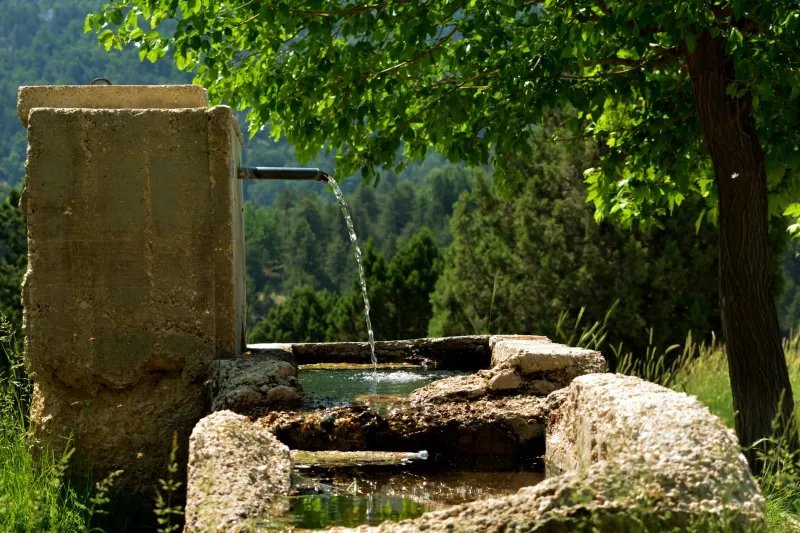
And water is not just water. Depending on where a brewery draws its supply, that liquid can carry wildly different mineral profiles — calcium, magnesium, sulfates, bicarbonates — each of which interacts with the brewing process in distinct ways. Those minerals affect mash pH, yeast behavior, hop bitterness perception, and ultimately the flavor in your glass.
Brewers have known this for a long time. The reason Burton-on-Trent in England became famous for pale ales wasn't just talent — it was sulfate-rich water that made hops sing. Czech Pilsners got their legendary softness partly from the exceptionally low-mineral water around Plzeň. Classic brewing styles evolved in specific places because the local water made certain beers taste better there.
What's new is that American craft breweries are now actively celebrating and marketing this reality rather than just quietly compensating for it.
Colorado's Mineral Personality
Take Colorado. The state's brewing scene is enormous — it consistently ranks among the top in the country for brewery count — and a handful of producers there are starting to treat their regional water chemistry as a genuine differentiator.
Mountain snowmelt filtered through granite and mineral-dense rock produces water with a distinctive hardness profile. Breweries in Denver and the Front Range have historically had to soften or adjust that water for certain styles, but some are flipping the script entirely, designing recipes specifically around what their local water naturally does well.
Brew styles that benefit from higher mineral content — certain English-style ales, West Coast IPAs where sulfates can sharpen hop bitterness — are a natural fit. A few Colorado producers have started explicitly calling this out in their tasting notes and brewery tours, framing the mineral content not as a variable to manage but as a regional signature to celebrate.
It's a subtle shift, but it's a meaningful one.
The Pacific Northwest's Soft-Water Advantage
Head to the Pacific Northwest and you're dealing with a completely different situation. Cities like Portland and Seattle are famous for exceptionally soft, low-mineral water — and that softness is part of why the region developed such a strong identity around clean, hop-forward lagers and certain styles of pale ale.
Soft water doesn't clash with delicate malt characters. It doesn't amplify bitterness in ways that can turn harsh. For brewers who want a beer where nuance and drinkability lead the charge, that local water profile is a genuine asset.
Some Northwest breweries have started leaning into this publicly, emphasizing that their water source — whether it's the Bull Run watershed feeding Portland or the Cedar River system supplying Seattle — contributes something real and unreplicable to their final product. It's not marketing fluff; the chemistry backs it up.
Wild Yeast and the Air Around You
Water isn't the only geographic variable getting attention. A smaller but passionate corner of the craft beer world is exploring spontaneous fermentation — the practice of leaving wort exposed to open air and letting wild, local yeast and bacteria do the work.
This is how traditional Belgian lambic is made, and it's a style that is almost comically dependent on place. The specific microbial ecosystem around the Senne Valley in Belgium isn't reproducible anywhere else, which is exactly the point.
American brewers experimenting with coolships — the shallow, open vessels used to inoculate wort with wild microorganisms — are discovering that their local microbial populations produce genuinely distinct results. A spontaneous ale brewed in the Hudson Valley tastes different from one made in the Texas Hill Country, and that difference is traceable to the organisms floating through the air in each place.
It's the most literal possible expression of terroir, and it's gaining a serious following among craft beer enthusiasts who geek out on provenance.
Does It Actually Matter to Drinkers?
Here's where it gets complicated. Terroir is a compelling narrative, but narratives don't always survive contact with a blind taste test.
Wine has decades of research — some rigorous, some less so — exploring whether people can actually detect regional differences in a glass. The results are mixed. Expert tasters often can; casual drinkers often can't, or at least can't articulate what they're detecting.
Beer adds another layer of complexity. Brewers have far more control over their process than winemakers do. A brewer who doesn't like what their local water does to a recipe can adjust mineral additions, filter aggressively, or blend sources. Many do exactly that. So when a brewery talks about its regional water profile, it's worth asking whether they're actually letting that profile express itself or whether they're adjusting it to hit a target and then telling a geographic story anyway.
The honest answer is: it depends on the brewery and the style. For producers genuinely committed to minimal intervention — spontaneous fermenters, brewers designing recipes specifically around their native water chemistry — the terroir argument holds real water (sorry). For others, it's more of a marketing angle than a flavor reality.
Why It Still Matters Either Way
Even if every terroir claim doesn't survive scientific scrutiny, there's something genuinely valuable happening here. Craft beer has always been about pushing back against the homogenization of mass-market brewing — the idea that beer should taste the same regardless of where it's made or who made it.
Leaning into geographic identity, whether through water chemistry, local grain sourcing, or wild fermentation, is a natural extension of that philosophy. It gives independent breweries a story that a multinational corporation genuinely cannot replicate. You can't fake being from somewhere.
And increasingly, that sense of place is exactly what a growing segment of craft beer drinkers is looking for. Not just a well-made IPA, but a well-made IPA that could only have come from this valley, this city, this particular stretch of watershed.
If terroir gives breweries a reason to dig deeper into what makes their local environment distinctive — and gives drinkers a richer way to think about what's in their glass — that's probably a good thing for everyone, regardless of how the chemistry shakes out.
Your water is showing. Turns out, that might be the whole point.