Brewing by the Numbers: Inside the Labs Where Science Is Reshaping Craft Beer
There's a romanticized image most of us carry around when we think about craft brewing — a bearded brewer hunched over a kettle, tasting, adjusting, trusting decades of instinct to guide the next batch. That image isn't exactly wrong. But increasingly, it's only half the picture.
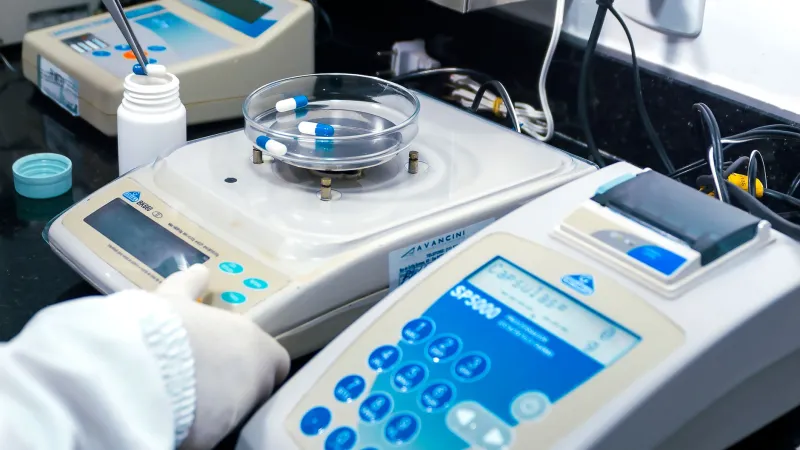
Across the country, a growing number of craft breweries are installing lab equipment that wouldn't look out of place in a university chemistry department. pH meters, dissolved oxygen analyzers, spectrophotometers, and yeast cell counters are becoming standard fixtures alongside mash tuns and fermenters. And some operations are going even further — pulling in consumer data, running sensory panels, and using predictive modeling to figure out what their next breakout beer might taste like before a single grain is milled.
The question hanging over all of it: does any of this actually make beer better, or does it just make it more consistent?
From Gut Feel to Gas Chromatograph
For most of craft brewing's modern history — think the mid-1980s through the early 2010s — the industry ran on passion and palate. Homebrewers turned pro. Recipes evolved through batches and mistakes. The trial-and-error approach had real charm, and it produced some genuinely iconic beers.
But it also produced a lot of off-flavors. Acetaldehyde giving a beer that green apple bite. Diacetyl leaving an unwanted buttery slick. Infection turning a flagship IPA into something closer to kombucha. For small breweries operating on razor-thin margins, a bad batch isn't just an embarrassment — it can be a serious financial hit.
That's part of what's driving the shift. When you can catch a fermentation problem early through data monitoring rather than discovering it at the packaging line, the business case is pretty hard to argue with. But the breweries getting the most attention right now aren't just using science defensively. They're using it offensively — to actually engineer flavor.
What the Data Actually Tells You
Breweries like Allagash in Portland, Maine, and Dogfish Head in Milton, Delaware, have talked openly about incorporating more rigorous analytical processes into their R&D workflows. But the trend runs deep into mid-size and even smaller regional operations too.
Take the way some breweries are now approaching hop selection. Rather than choosing varieties based on aroma descriptions alone — "notes of tropical fruit and pine" — lab-forward breweries are analyzing the actual chemical compounds responsible for those descriptors. Myrcene, linalool, geraniol — these terpenes and essential oils can be quantified. Once you know what concentration of a particular compound creates a specific sensory experience, you can start building recipes with a lot more precision.
Fermentation monitoring has gotten similarly granular. Real-time sensors tracking gravity, temperature, and CO2 production let brewers intervene at exactly the right moment rather than guessing. Some operations are logging thousands of data points per batch and using that historical record to tighten up consistency across production runs — or to deliberately recreate the conditions that produced an unusually good one-off batch.
And then there's the consumer feedback angle. A handful of forward-thinking breweries have started building structured sensory panels into their development process, essentially running small-scale focus groups with trained tasters to evaluate prototype recipes before committing to a full production run. It's the kind of approach you'd expect from a beverage giant, not a 10-barrel operation in the Pacific Northwest.
The Authenticity Problem
Here's where things get philosophically interesting — and where craft beer's identity starts to feel a little bit at stake.
The word "craft" carries weight in this industry. It implies something handmade, human-scaled, imperfect in the best possible way. When Sierra Nevada built its reputation or when Brooklyn Brewery helped define what East Coast craft could be, the story was always partly about people making decisions with their hands and their senses. Science was in the background, sure. But it wasn't the headline.
Some brewers are openly uncomfortable with where this is heading. The concern isn't that data is bad — it's that an over-reliance on optimization can sand down the weird edges that make a brewery distinctive. If every decision gets filtered through what the numbers say consumers prefer, you might end up with very consistent, very drinkable, very forgettable beer.
It's a fair point. The beers that tend to generate genuine excitement in the craft world are usually the ones that feel like someone took a risk. A funky saison with an unusual yeast strain. A stout aged in something unexpected. A lager brewed with a grain nobody's touched in fifty years. Those beers don't come from an algorithm.
Finding the Balance
The breweries navigating this most successfully seem to be the ones treating data as a tool rather than a compass. Science handles quality control and consistency. Creativity still drives the big swings.
Think of it this way: knowing exactly what your water chemistry looks like doesn't tell you to brew a smoked porter with local mesquite malt. But once you've decided to try that, having tight control over your process gives that weird, ambitious idea the best possible chance of actually working.
Some brewers describe it as raising the floor without lowering the ceiling. You're not using data to figure out what to make — you're using it to make sure that whatever you're trying to make actually comes out the way you imagined it.
There's also something worth noting about scale. A 500-barrel regional brewery running three shifts has different needs than a 3-barrel taproom operation where the brewer is literally tasting every batch personally. The data science conversation matters most at the level where you can't be in the room for every decision.
What It Means for Your Pint
If you're a regular at your local taproom, you might not notice any of this. The brewer's still back there talking about the new hop contract they're excited about, still pouring samples of the experimental batch they're not sure about yet. The vibe hasn't changed.
But behind the scenes, the tools available to even small breweries are genuinely more sophisticated than they were a decade ago. Affordable lab kits, open-source fermentation tracking software, and shared sensory evaluation frameworks have made the science accessible without requiring a full-time chemist on staff.
The result, at its best, is craft beer that's more reliably excellent — and still surprising. The data keeps the lights on and the quality up. The brewer's imagination keeps things interesting.
And honestly? That sounds like a pretty good formula.