Wood, Time, and Chemistry: Inside the Barrel-Aging Programs Turning Craft Beer Into Something Extraordinary
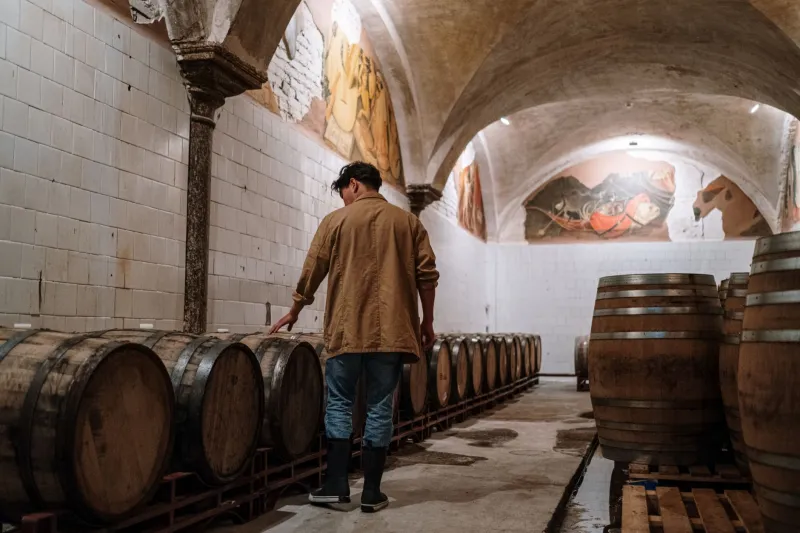
There's a corner of most serious craft breweries that doesn't smell like fresh hops or warm grain. It smells like a bourbon distillery met a French winery in an old warehouse and decided to stay a while. That's the barrel room — and if you want to understand where American craft beer is headed, you'd better spend some time in there.
Barrel-aging isn't new. But what's happening inside those programs right now? That's a different story entirely.
The Cellar Isn't Just Storage — It's a Reactor
Ask any head brewer managing an aging program and they'll tell you the same thing: the barrel is alive. Not metaphorically. Literally. Wood is porous, and every stave in a bourbon barrel or wine cask is home to microorganisms, residual sugars, and compounds that interact with your beer in ways that are still being mapped by food scientists.
At its most basic level, what happens inside a barrel is an exchange. Beer loses water and alcohol through evaporation — the so-called "angel's share" that distillers have mourned for centuries. In return, it picks up vanillin, tannins, lactones, and a cocktail of flavor compounds that the barrel absorbed during its previous life holding whiskey, wine, or spirits. The longer the beer sits, the more complex that exchange becomes.
But temperature is the variable that most casual drinkers never think about — and it might be the most important one.
"When the temperature rises, the beer expands and pushes deeper into the wood," explains one head brewer at a mid-sized Midwest operation that runs a cellar of over 200 barrels. "When it cools, it contracts and pulls back out, bringing those compounds with it. If you can control the rhythm of that cycle, you can actually guide what flavors develop."
Some breweries are doing exactly that — using climate-controlled aging rooms where temperatures are deliberately cycled through seasonal ranges, mimicking what a traditional outdoor cellar would experience naturally over a year. Others are taking a more hands-off approach, letting the natural climate of their region drive the process. Neither method is strictly better. But the intentionality behind either choice is what separates a thoughtful program from just stacking barrels and hoping for the best.
Beyond Bourbon: The Wood Experimentation Era
For years, the default in American craft barrel-aging was bourbon oak, and for good reason. Kentucky and Tennessee bourbon culture left a trail of once-used charred oak barrels across the country, and craft brewers — always resourceful — figured out early that those barrels were liquid gold for stouts, porters, and barleywines.
But the industry has moved well past that default. Today, you'll find craft breweries aging beer in everything from Madeira casks and Calvados barrels to former tequila containers, Japanese mizunara oak, and even acacia wood sourced from small cooperages.
Each wood species brings its own chemistry to the table. American white oak, the workhorse of the bourbon world, contributes those familiar vanilla and caramel notes. French oak — beloved by winemakers — is tighter-grained, which means slower extraction and more subtle spice. Mizunara, which is notoriously difficult to work with, delivers coconut and incense-like qualities that can transform a wild ale into something almost meditative. Chestnut, popular in parts of Europe, adds earthy, tannic depth that plays beautifully with darker styles.
"We started thinking about wood the way a chef thinks about seasoning," says the cellar manager at one Pacific Northwest brewery that's built its entire brand identity around experimental wood aging. "The base beer is your dish. The barrel is your spice rack. And some of those spices are really, really weird — but that's the point."
Microbes: The Uninvited Collaborators
If wood chemistry is the planned ingredient in barrel-aged beer, microbial activity is the wildcard — and it's a wildcard that the best brewers have learned to lean into rather than fear.
Barrels that previously housed wine or fruit spirits often carry resident populations of Brettanomyces yeast, lactic acid bacteria, and other microorganisms that can dramatically alter a beer's flavor profile. In the wrong hands, this produces something undrinkable. In the right ones, it produces the funky, earthy, complex character that defines some of the most sought-after bottles in American craft beer.
Breweries with dedicated mixed-fermentation or spontaneous programs — think the sour beer specialists of the Midwest and East Coast — have essentially built their entire identities around cultivating these microbial communities intentionally. But even breweries that don't specialize in wild beer are starting to think more carefully about what lives in their barrels.
"We inoculate some barrels with specific cultures and let others develop naturally," one Colorado brewer explained during a recent cellar tour. "The naturally developed ones are always the most surprising. Sometimes they're disasters. Sometimes they're the best thing we've ever made. That uncertainty is part of what makes the program exciting."
Patience as a Production Value
Here's the part that's hard to explain to a business-minded investor: barrel-aging programs are expensive, slow, and unpredictable. You tie up capital in barrels that cost anywhere from $100 to several hundred dollars each. You lose volume to evaporation. You wait months — sometimes years — before you know if a batch worked. And then you sell it in small quantities at a premium price to a customer base that's increasingly sophisticated about what they're paying for.
And yet the programs keep growing.
The reason, most brewers will tell you, is that barrel-aged releases have become a cornerstone of brewery identity. They're the bottles that end up in people's cellars, traded on online forums, and poured at special occasions. They're the beers that people drive to a taproom specifically to buy. In an era when craft beer shelf space is brutally competitive and consumer attention is fractured, a well-executed barrel-aging program is one of the clearest ways a brewery can signal that it's serious.
"Anyone can brew a drinkable IPA," says one head brewer whose annual bourbon barrel stout release sells out within hours. "But a barrel-aged program that actually delivers something transformative? That takes years to develop. You can't fake that."
What's Coming Next
The frontier of barrel-aging in American craft beer is moving fast. Breweries are experimenting with smaller format barrels to accelerate extraction, using ultrasonic technology to speed up wood interaction, and borrowing solera-style blending methods from the sherry world to create beers that carry DNA from multiple vintages.
There's also growing interest in what some brewers are calling "secondary terroir" — the idea that the history of a barrel, including where the wood grew, where the previous liquid was made, and how the barrel was stored, contributes to a beer's sense of place just as much as local water or local grain.
It's a heady idea. But then again, so is the notion that a brewer in Ohio or Oregon can coax something wine-cellar-worthy out of a recycled whiskey barrel and a whole lot of patience.
The barrels are stacked. The temperature is set. Now we wait.