Poured Into History: 5 Brewery Collaborations That Actually Changed the Game
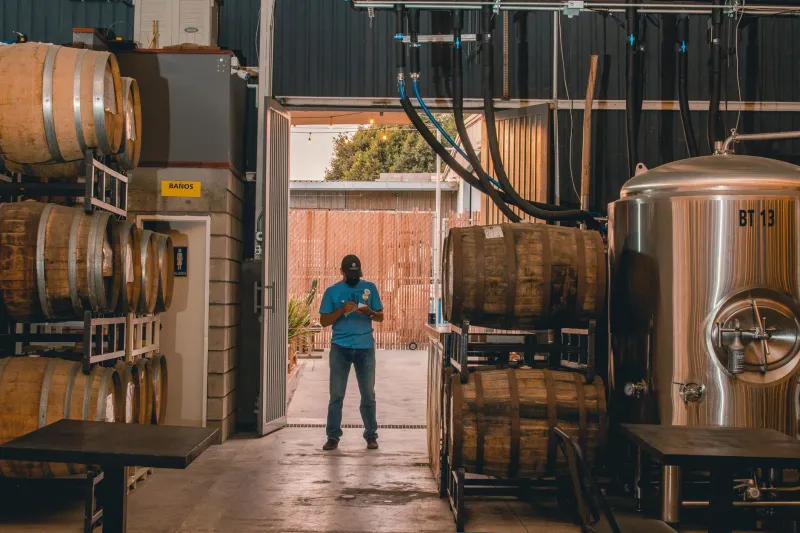
Collaboration is practically baked into craft beer's DNA at this point. Walk into any taproom and you'll find at least one collab tap — a one-off with a neighboring brewery, a joint release with a local coffee roaster, something brewed on a road trip to another city. Most of them are good. Some are great. But a few of them were genuinely transformative — not just for the breweries involved, but for the whole culture.
These are five of those. Not just notable beers, but pivotal moments. Pours that introduced new audiences to breweries they'd never heard of, opened distribution doors that had been stuck shut, and — in a couple of cases — actually changed how the rest of the industry approached the idea of working together.
1. Russian River & Vinnie's Traveling Road Show (Various Years)
Before Pliny the Elder was a cultural phenomenon, Russian River was a beloved regional brewery with an outsized reputation among West Coast hop heads. When Vinnie Cilurzo started doing collaboration brews — hitting the road with his recipes and brewing at partner facilities across the country — it wasn't just a PR move. It was a masterclass in how a small brewery could build national relevance without national distribution.
The road show format introduced Russian River's approach to double IPAs to drinkers in markets where the beer had never been poured. Breweries that hosted the sessions got a credibility boost and a packed taproom. The format has since been replicated dozens of times, but Vinnie's version set the template: show up, brew something serious, let the beer do the talking.
2. Dogfish Head & Sierra Nevada: Life & Limb
When Dogfish Head and Sierra Nevada announced they were co-brewing a beer in 2009, it felt like a crossover episode that nobody knew they needed. These were two of the most recognizable independent breweries in the country, operating in completely different style lanes, with completely different identities. The beer they made — Life & Limb, a birch syrup and maple sap ale — was strange, ambitious, and deeply American.
What made it matter wasn't just the liquid. It was the signal it sent. Two big-name independent breweries publicly choosing cooperation over competition told the rest of the industry something important: collaboration wasn't a sign of weakness or a marketing stunt. It was a legitimate creative act. The ripple effect of that framing is still felt today every time two breweries decide to pool their best ideas instead of protect them.
3. Allagash & Cantillon: A Transatlantic Sour
This one almost didn't happen. Getting a Belgian lambic producer of Cantillon's stature to agree to a collaboration with an American brewery was, at the time, a bit like getting a Michelin three-star chef to co-author a cookbook with someone they'd never met. But when Allagash's Rob Tod made the trip to Brussels and the two teams found common ground in their shared obsession with wild fermentation, the result was a beer that became a benchmark.
More importantly, it validated American wild ale as a serious craft tradition in the eyes of European brewing culture — which, in 2012 or so, was not a given. For American sour brewers who had been working in Cantillon's shadow, seeing that collaboration land with credibility on both sides of the Atlantic opened a door that's never fully closed.
4. Jester King & Prairie Artisan Ales: When Texas Met Oklahoma
Regional collaborations don't always make national headlines, but this one deserved to. Jester King, Austin's farm brewery and wild ale pioneer, and Prairie Artisan Ales out of Oklahoma City were operating in adjacent spaces — both obsessed with funky, barrel-forward, unconventional brewing — but represented very different markets and audiences.
The beers they made together (across multiple rounds of collaboration) helped establish a Southern and Central US identity for serious craft brewing that had long been overshadowed by the coasts and the Midwest. For drinkers in Texas, Oklahoma, and neighboring states, seeing two local heavyweights go deep on complex, cellar-worthy releases was a statement: this region has its own voice, and it doesn't need to be derivative of anyone else's.
5. Mikkeller & Any US Brewery, Basically Every Year
This one's a little different because it's less about a single beer and more about a sustained model. When Danish gypsy brewer Mikkel Borg Bjergsø started partnering with American breweries — brewing at their facilities, blending their house character with his recipe sensibility — he created a template for international creative exchange that didn't require anyone to build a new facility or negotiate a distribution deal.
The Mikkeller model made the world of craft beer feel genuinely smaller and more connected. American brewers who hosted him got exposure to European drinkers and press. Mikkeller's US fans got to taste something that could only exist at the intersection of two brewing cultures. And the concept of the traveling brewer — the creative nomad who makes beer wherever the right partner exists — became a recognized and respected thing in a way it hadn't been before.
What These Five Have in Common
Look across all of them and a pattern emerges: the collaborations that changed things weren't just about making a good beer. They were about two parties bringing genuinely different perspectives to the same table and producing something neither could have made alone. The beer was evidence of the conversation, not just the product.
The best collabs still work that way. The ones that don't — the ones where two breweries slap each other's logos on a beer that either of them could have made solo — are fine, but they don't move the needle. The ones that do are the ones where both teams showed up willing to be changed by the process.
That's worth remembering the next time a tap takeover rolls through your local spot. Ask what made this one happen. The answer usually tells you whether it's worth your pint.